









Climate change has become a reality, and this year’s prolonged dry spells between periods of rain have allowed insect populations to multiply.
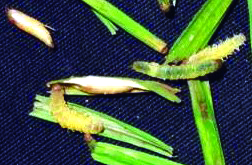
The white-winged caseworm moth lays its eggs on rice paddy leaves. The caterpillars that hatch feed on the leaves, rolling them into cigar-shaped cocoons or ‘cases’. They then cut themselves free from the plant to pupate. Damage caused by the caseworm is often mistaken for grazing by small animals until the floating ‘cases’ are seen on the water in the field. Running a rope over the plants helps dislodge the cases, which then float towards the outlet when the field is drained. They can be collected using an empty onion sack or a piece of shade net. Care should be taken to drain the field only when rain is expected; otherwise the crop may suffer from water stress if left dry.
The monsoon is also the season when the GI-tagged Khola chilli thrives. If you are growing chillies, capsicum, tomato or brinjal (aubergine), the whitefly Bemisia tabaci is a common pest. It not only damages plants by sucking sap from the undersides of the leaves but also spreads several plant diseases. Symptoms include leaf curl, reduced leaf size and generally unhealthy-looking plants. The problem is often worsened by mealybugs, which resemble flour or a white fungal growth on young shoots and leaves. A thorough spray of Beauveria bassiana suspension, commonly available under the brand name Baba, is usually sufficient to control both pests. To help prevent soil-borne fungal diseases that can cause plants to wilt and die at flowering time, apply 10 ml or 10 g of Trichoderma viride, which is available in Goa in both liquid and powder forms.
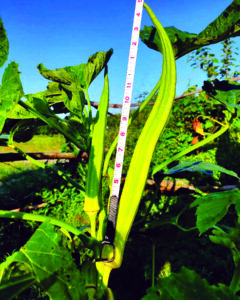
Ladyfinger, or ‘bhendi’ (Abelmoschus esculentus), is a popular monsoon vegetable. Varieties available through Government sources include ‘JK-62’ and ‘Radhika’, while seeds of the local ‘Sath Xirancho Bhendo’ are sold by private dealers. The Elephant Tusk bhendi from Kerala is available in Tivim and is sold on Friday mornings near the ZAO office in Mapusa. This is a good time to sow the crop if you did not plant it in May or June. Do not be tempted to spray chemical pesticides if caterpillars make holes in the leaves. Dusting wood ash onto wet leaves provides an effective repellent. Otherwise, the damage can usually be ignored.
This is also the right time to sow cluster beans, or ‘tiddki’, by direct seeding, as with ladyfinger. Being legumes, cluster beans enrich the soil by fixing atmospheric nitrogen through a symbiotic relationship with Rhizobium bacteria. However, they often attract aphids once flowering begins. These soft-bodied insects can cover the pods, giving them a grey or black appearance. Ladybird beetles feed on aphids naturally, while dusting the plants with wood ash also helps control infestations. When grown using organic manures, cluster beans have a superior flavour. Consumers recognise the difference and are often willing to pay a premium for locally grown tiddki beans produced without chemical insecticides.
Learn to manage pests naturally this monsoon and enjoy a healthier, more productive vegetable garden.
~ MIGUEL BRAGANZA

Featured Events
The Indo-Portuguese Friendship Society (IPFS), Goa, in collaboration with the Fundação Cidade de Lisboa, has announced its upcoming Portuguese language courses from July 1 to November 30 to be conducted in both Panaji and Margao branches. Limited seats. Details: 9552596875.


Fundacao Oriente in India, in association with the Department of Art & Culture, Government of Goa, will hold the fourth edition of the ‘Stars of the Future’ (SOF) Quiz Competition for high school and higher secondary students in Goa from October 28 to 31. Schools can register for the contest by emailing fosof2026@gmail.com. Each school can enter up to four teams, with a maximum of four students in each team.

Featured Blog
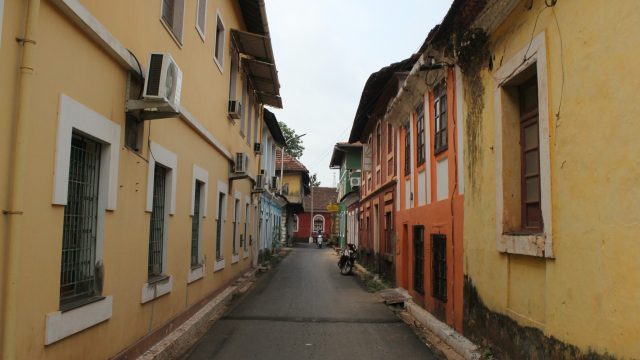
Fontainhas – Goa’s Latin Quarter
Experience the vibrancy of Portuguese architecture in this quarter of Panaji. The Fontainhas is the oldest Latin Quarter located in Panaji. In the late 1700s, this locality belonged to a Goan expat who was also known as ‘Mossmikar’, as he hailed from the Portuguese colony of Mozambique in East Africa. Since this place was an open space it was called as ‘Mollo’, finally leading to be identified as ‘Mala’.The ‘Mossmikar’ later converted this land into coconut plantation hence called as Palmar Grande. The Fontainhas became more civilized when the Portuguese moved out from Old Goa to Panjim in the 1840’s due to sanitary problems that led to repeated outbreaks of plague in Old Goa.Since this was a plain area, it became the first choice of habitation for the Portuguese. When the Kadambas ruled Goa, what we now know as Panaji was called as Pancham Khali. The Portuguese called it as Novo Goa or New Goa as they had moved out of Old Goa.The city of Panaji was built around Fonte de Phoenix. Fonte De Phoenix (Fountain of Phoenix) is a water reservoir which was constructed in the Portuguese era. On the top of the fountain there was a plate which […]
The Goan Fish Tales
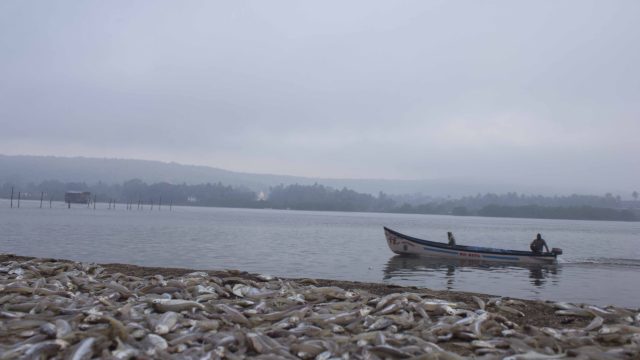
Fish is considered as the staple diet of the Goan people. All humans use readily available edible resources and slowly develop a culture around it and the knowledge is passed from generation to generation. Fish became an integral part of Goan diet from prehistoric times (50000-60000 years before present). Goa has an unenviable culture showcasing different ways communities look at, understand, worship, love/hate, catch, cook and serve fish. Goa being rich in freshwater and marine ecosystems offers free, highly diverse (about 250 species of fish and shellfish) fisheries resources so the culture of catching fish developed much before animal husbandry or agriculture. Due to early semi-nomadic settlers who camped first in Mandovi and Zuari river basins about 50-60000 years ago and developed the practice of catching fish using different gears. [siteorigin_widget class=”SiteOrigin_Widget_Image_Widget”][/siteorigin_widget] Fish was a staple diet in ancient Goa even before the caste system was developed so almost all ethnic Goan communities are found to utilize fish in their food but there are clear taboos about meat. After the advent of GSB (Goa Saraswat Brahmins) migrants the legend of Sage Saraswat saving the Vedas by consuming fish from Vedic river Saraswati became popular and the Brahmins too justified consumption […]

Whirlpools, crocodiles, and more. Find out what the life of a fisherman is like.
A cool breeze blows and the water laps gently against the river bank. A man walks towards the river carrying his floating net. He gets into the boat and uses his strong arms to expertly row to the desired spot to cast the net for catching fish. SHERYL GONSALVES | NT GOGOANOW This happy-go-lucky Goan is Prakash. He goes fishing 2-3 times a week as it is one of his ways of earning a living. During his childhood, he had a tough life as his parents struggled to feed him and his seven siblings. From a young age, he was a keen learner. Just by watching different people at work, he was able to pick up various other trades like carpentry and vegetable cultivation. He has observed that during the summer there is more fish to catch. According to him, the months of April, May, and June are the best months to fish. During the rainy season, he avoids fishing as the river waters get choppy. In the past few years, fishing has become a bit tougher for him because of crocodiles and seals. Seals move very quickly to steal the fish they catch and even come to bite them. […]
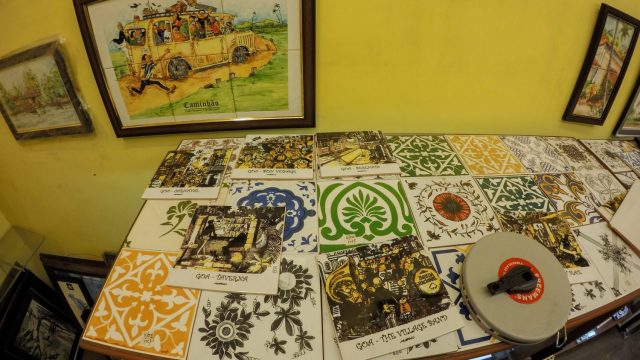
Azulejos- Tiles, Thoughts and Art
Velha Goa Galeria Velha Goa Galeria is a place full of various creative pieces. They sell products like ceramic tiles, clay items, glassware, tableware, and cutlery. The majority of their products are Azulejos (hand painted glazed tiles). The price range of the products is approximately between Rs.300 and Rs.15,000. They also conduct workshops and hold exhibitions. . . Address- H.No.191, Rua de Ourém, Fontainhas, Altinho, Panaji, Goa . Telephone: 98221 59881 Azulejos de Goa The Portuguese style craft, Azulejos, is beautiful. These hand-painted tiles take hours to make. Orlando Noronha went to Portugal and started getting into this craft. He says, “ I always wanted to do something different. It’s an art that I learned in Portugal in 1998 as a hobby and later on when I returned I thought of reintroducing this beautiful art in Goa with Goan designs, motifs, etc.” He is of the opinion that it will always be trendy. His place in Panjim, Azulejos de Goa, is crowded with these tiles and the most popular items are Azulejos tiles and plates. Orlando’s products are also available at Taj Khazana, Magsons […]
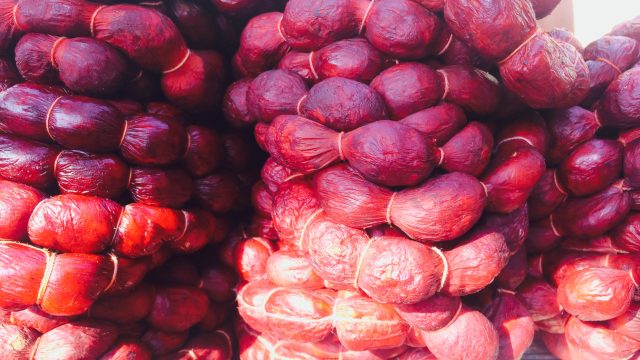
Chorizos- The King of Sausages
Pork sausage is one of the traditional food items of the Goan cuisine. It is mostly loved by the Catholic community of Goa. Pork sausage is basically a boneless pork meat that is seasoned with the required spices and is marinated with vinegar. This mixture is then kept in an earthen vessel over a period of two days. This process allows all the spices and the vinegar to blend properly with the raw meat. The filling is then stuffed into casings which are made up of a layer of intestines of beef meat. They can be eaten boiled, fried, as pork chops and as a pie filling in sandwiches. The most common dish that is prepared by using the sausages is the ‘Choris pao’; bread stuffed with sausages. Pork sausages are easily available in New Margao Municipal market, near the old Margao Municipal building and the Mapusa Market. Pics Credit – Shivang Mishra I NT GOGOANOW.COM [siteorigin_widget class=”SiteOrigin_Widget_Image_Widget”][/siteorigin_widget]
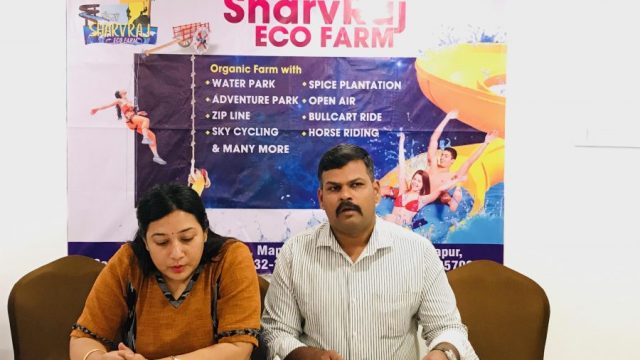
An eco-farm with thrills and adventure for the first time in Goa
For the first time in Goa, an eco-farm will be opening which consists of more than just a farm or spice plantations. People can come here and admire the farm and get thrills as well. The construction of SharvRaj Eco-farm at Padoshe Sanquelim in Sattari taluka will be in five phases. The first phase will be inaugurated on 9th March 2019 at 4 pm. It will be open to the public from 10th March 2019 onwards. The first phase is built in an area of 10 acres. The farm consists of horticulture, rainwater harvesting, vegetable cultivation, borewell recharge, different types of irrigation methods, medicinal herbs, water management, organic fertilizers, and more. Those who love adventure will be able to find it at the eco-farm’s adventure park which has features such as Burma bridge, climbing net, rope net crossing, catwalk net, sliding net, log swinging bridge, tyre climbing, and rock climbing. Their water park facilities are a water play station, family slide, spiral slide, multilane slide, and so on. Another attraction of SharvRaj Eco-farm will be the thrill rides- sky cycling (the first in Goa) and zip lining. Other activities include horse rides, bull cart rides, archery, etc. They will be […]

Traditional sweets of Goa
We have all heard about the famous Goan fish thalis, prawn curries, sorpotel, chicken cafreal, and vindaloo. Now it’s time to celebrate the sweets of Goa. The people of Goa still make traditional sweets from recipes passed down from generation to generation. Here are some of the famous traditional sweets of Goa: Bebinca This is a type of layered pudding. The ingredients which usually go into it are all-purpose flour, eggs, sugar, coconut milk, nutmeg, and ghee. It takes time to prepare this lovely dessert as each layer has to be baked first before adding the next one. Bebinca usually has 7 to 16 layers. In many places, it is served with vanilla ice-cream. You can eat all the layers at once or peel one layer at a time and savour each one. [siteorigin_widget class=”SiteOrigin_Widget_Image_Widget”][/siteorigin_widget] Dodol Dodol is made using coarsely ground raw paddy rice flour, black jaggery, coconut milk, and cashew nuts. The coconut is ground and the juice/ milk is extracted. It is traditionally cooked on firewood. The end result is a pudding-like sweet which almost melts in your mouth. It is mostly made for Christmas. Sugar isn’t used and so dodol gets its taste from the delicious Goa […]
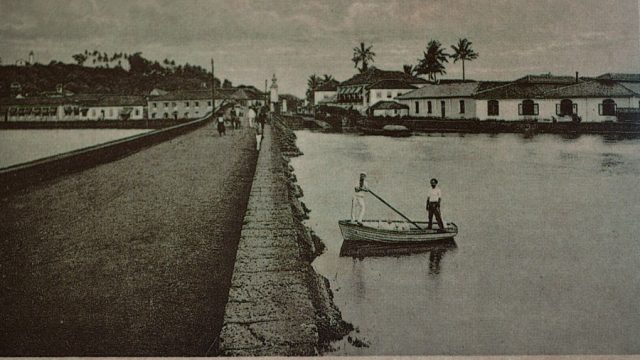
A sneak-peek into life in Goa decades ago
Have you ever wondered how Goa was in the past? A simple 82-year-old Goan lady shares details about her life with us. Sheryl Gonsalves | NT GoGoaNow What was Goa like during your youth? There was unity in the family. My mother used to go out of the way by making less for the family and giving the neighbour. My food diet was usually rice and curry. Chicken and other meat was a luxury which was eaten for festivals. Beef was rarely consumed but pork was the most common thing. There were no fridges so we made dishes that could last for some time. I also usually had pulses, beans, pumpkin, gourd, and long string beans. A lot of superstitions were believed in those days. We were told to not go out at night because evil spirits are roaming. On ‘All souls day’ people believed that the souls will come and drink water. They would keep food on top of the roof for the souls. Another superstition was that after midnight a headless evil man/ spirit will roam with a stick. So if people heard any sound like a stick beating something, they would put the lights off and hide […]

Backpacking Guide: Panjim
Lush green trees and the pristine Mandovi River flowing are notably one of the few things one will see cruising through the beautiful City of Panjim. Panjim being the capital city of Goa calls many visitors. Cruising through Panjim will definitely take a travel thirsty wanderer back in time to the Portuguese era. Fontainhas Fontainhas is famously known to be the Latin quarters of Goa has proven to be a very photo-worthy location for many. The feature of this place is Portugal infused architecture. Walking through the lanes of Fontainhas you’ll notice walls painted in hues of blue, yellow and strip white and that’s only the tip of the beautiful architecture. Walking through the lanes it’s definite to find many cafes and art galleries. Dive deeper into the architecture as you walk into the art galleries. Our Lady of Immaculate Conception One of the most famously known Churches in Goa is the Our Lady of Immaculate Conception Church. The church stands tall in the center of Panjim and receives hundreds of visitors on a daily basis. The church’s white color instantly grabs the eye. Another feature of this church is its zigzag stairs that lead to the church. The church […]
Backpacking Guide: Baga
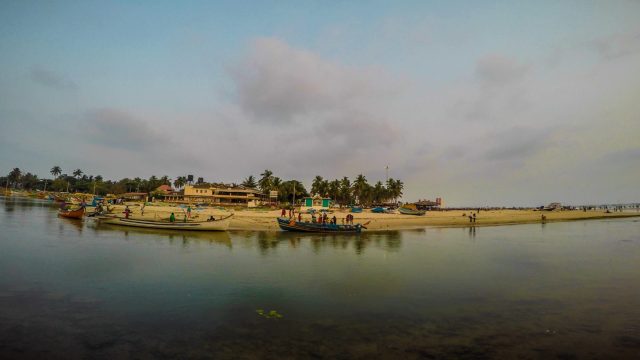
Want to experience the nightlife as well as the serene beaches during a tight vacation? Baga is the place to be! Baga is indeed one of the most serene yet commercialized places in Goa. Baga, a small village, along the coast of Goa is nothing but beautiful for the traveler who is on a time limit. Baga creek Baga creek is the perfect place for you to sit and watch the sunset. Right next to Baga beach lays the creek and it has one of the most beautiful views. The picture perfect place makes it a get-away to few locals who come fishing daily and also a view of the ever buzzing Baga beach. The creek is surrounded by beautiful rocks with the waves clashing against it. Saturday night market Another place to visit whilst in Baga is the Saturday Nite Market. As the name specifies, the market is open during the nights. The vast number of stalls sell clothes, jewelry and other kinds of artistic pieces. They also have food stalls that’ll help curb that mid-night hunger! They also have an open stage which gives upcoming talent showcase their work. Baga tibetian market Baga Tibetian Market is another flea […]
When a fashion designer is in lockdown…
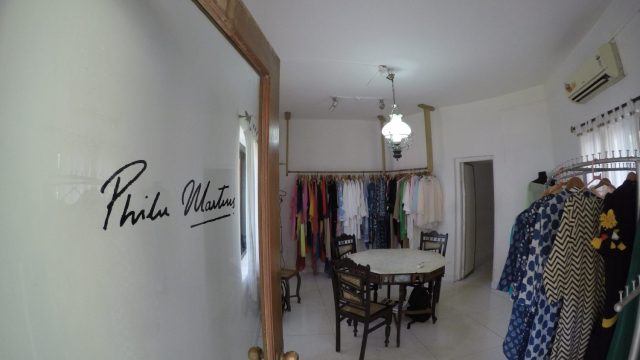
Life changed a lot as a lockdown was imposed on Goa. Some people loved the free time while others got jittery. Philu Martins, a fashion designer from Goa, speaks to NT GoGoaNow about her life during lockdown. Sheryl Gonsalves | NT GoGoaNow Picture Credit – Shivang Mishra I NT GOGOANOW There is quite a difference between Philu’s daily routine before the lockdown and now. The bubbly fashion designer keeps herself busy with reading, housework, and exercises. “It’s a much healthier lifestyle. I’m eating more nutritious food and I love playing with my lovely dogs.” Philu doesn’t think she’s a good cook but that hasn’t stopped her from trying out Goan recipes. “I really miss going out but this is a much required break which allows me to spend time with my family, and we are praying together and eating together. I’m blessed to have this housewife experience and I’m enjoying but I wouldn’t want it to last forever,” she reveals. Philu also misses her clients, staff, working with weavers, and the practical part of being a fashion designer as her workshop is closed but she grateful for the holiday. For Easter Sunday she was supposed to have a fashion show […]
In-conversation with Subodh Kerkar – Life during Lockdown
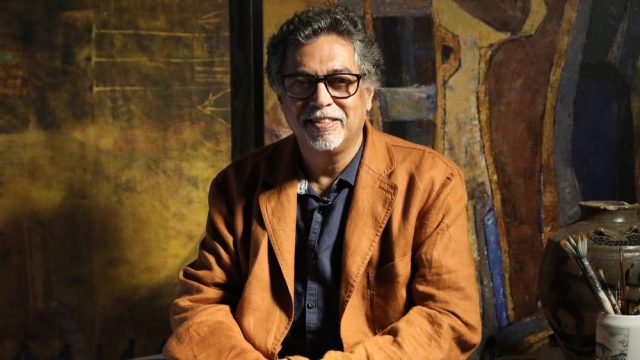
Why should you talk about art during the coronavirus? Subodh Kerkar, founder of Museum of Goa, answers this question while in conversation with NT GoGoaNow – “Art helps a lot during lockdown. Things like music, drawing, and cinema, makes life more bearable and enjoyable. Art is what makes us human.” Sheryl Gonsalves | NT GoGoaNow Subodh reveals that he’s been working on five children’s books which he didn’t get time for before. He has spent his lockdown days reading, drawing, and having online lectures for schools. This passionate artist is also studying art education for children and is trying to come up with new syllabi for kids. He is inspired by an eye-opening book that says that a person doesn’t have to be an artist to teach children art. “I’ve never had a better time in my life than this past 1 month. Because of the uninterrupted time, I’ve done a lot more works this month than I’ve done in the past 1 year,” Subodh says. Normally he used to work at his museum till 7 pm or later, but now he walks near the fields of Saligao everyday for 3-4 hours and has lost weight. When asked about the […]
A talk with a lady who creates Beauty out of Waste
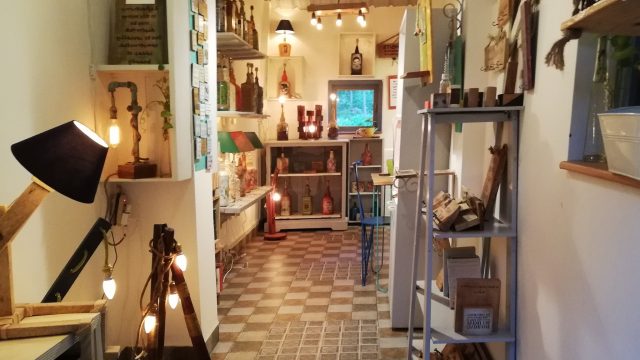
“I’m looking forward to a new normal. I haven’t thought that far ahead. Let’s take one step at a time and this too shall pass,” says Sharmila regarding the lockdown and the Covid-19 situation. Sheryl Gonsalves – NT GoGoaNow Sharmila, the owner of ‘Kitsch Bits’ creates beautiful items out of waste material. The pandemic affected her sales, which she expected, as nowadays people are more careful with their money because of the economic situation. During the lockdown, her time was spent doing housework, practicing woodburning, different painting techniques, experimenting with new waste products, and creating new looks for her works. The lockdown wasn’t boring for her. She even tried to knead her own bread when bread wasn’t available. However, Sharmila did get frustrated sometimes as she didn’t always have the material she needed to create her craftworks. All the housework led to tiredness, but what made her feel good was performing kind acts like feeding stray animals. She had plans to go to France this October but unfortunately had to cancel her trip. Sharmila suggests buying groceries once a week and carpooling instead of coming and going to the market so often and causing more pollution. She says: “We need […]
A simpler life is better ~ Literati Bookshop Founder
“We’re lucky to have a roof over our heads and our basic needs met,” says Divya Kapur, the founder of the Literati Bookshop in Calangute, while talking to NT GoGoaNow. Sheryl Gonsalves | NT GoGoaNow This ex-lawyer started focusing on what she could do at home during the lockdown. She checked in on her friends and family to see if they were okay. Divya jokingly shared that she’s not that productive but she spent her time reading, watching television, and engaged in some physical activities. Speaking about the Literati Bookshop she reveals that they’re encouraging people to opt for home delivery. Now they hold virtual book club meets but movie screenings and book launches can’t happen. Divya is of the opinion that a simpler life is better. She says, “I’m looking forward to going to the beach, swimming in the sea, and watching the sunset.” [siteorigin_widget class=”SiteOrigin_Widget_Image_Widget”][/siteorigin_widget] [siteorigin_widget class=”SiteOrigin_Widget_Image_Widget”][/siteorigin_widget]

A tribute to the cashew
Dedicated to the people of Goa, Goan musician O’luv has come out with his new music video ‘The CASHEW song of Goa’ Goan musician O’luv has released his new music video single ‘The CASHEW song of Goa’ on his YouTube channel O’luv Goa. The video has been created over a span of three months, with site visits to understand the process and to draw inspiration for the lyrics and to create the visuals. From the picking of the tree-ripened cashew apples with the ‘tochni’ or ‘kantto’ [ a stick with a spur or thorn near the tip], to the separation of the nut from the cashew apple for the extraction of the juice at the ‘kollbi’, to the fermentation and the two distillations at the ‘battie’ using the traditional clay-pot ‘lavnni’ as the condenser, most of the processes involved are covered in a song. The aim of the song is to celebrate the cashew (anacardium occidentale) that came from Brazil and became one of our own in Goa. We have found a number of uses for the tree, its nut and the cashew apple and it is now an integral part of the Goan culture and traditions. It is used […]

Beaches in Goa with less crowd
The shining sun is hitting the waves, making the ocean sparkle as it reflects the blue hues of the sky above. The gentle breeze and the calming sounds of the water make you slip into relaxation mode. However, there is one thing you may wish was different…. a beach that wasn’t so crowded! Written By: Sheryl Gonsalves Not to worry! Here is a list of beaches in Goa that’ll let you have a quieter, peaceful outing: NORTH GOA The North side of Goa has a notorious reputation for having crowded, noisy beaches. However, this isn’t entirely true. Here are some serene spots to visit for sand and sea… Morjim Beach This beach is quite famous for the Olive Ridley turtles who come to nest here and are helped by a group of volunteers who guard the nests and help the baby turtles get into the sea. The beach is also a favourite among Russian tourists, along with Ashwem beach close by, one will find signboards and menu cards in the Russian language. Mandrem Beach If you want to enjoy vast stretches of sand and water, this beach is the place to be! Colourful seashells dot the shores while little crabs […]
‘Rediscover Goa’ with Airbnb and experience the true beauty of the sunshine state
*A week long celebration of all things Goan announced in collaboration with Goa Tourism Department* Airbnb in collaboration with the Goa Tourism Department, launches ‘Rediscover Goa’, a week-long celebration of Goa’s vast cultural diversity beyond its beaches and dazzling nightlife. Cultre, a creative and cultural enterprise that seeks to promote India’s pluralistic cultural heritage through content, products and experiences has been onboarded as the knowledge partner to help curate the experiences and bring to life all things Goan. … The ‘Rediscover Goa’ celebration will take place from December 12-18, and will offer 20+ specially curated unique Airbnb Experiences hosted by local experts highlighting the eclectic culture, rich heritage, musical traditions, culinary delicacies and thriving landscapes of Goa across the Northern and Southern districts of the state. … This week-long celebration of Goa and its culture aims to highlight how the state’s inherited traditions and cultural legacy form the basis of Goan living even in this day and age. The experiences will not only let one indulge in the many bounties of Goa but also help engage with the vibrant local culture. The existing pockets of lesser-known curiosities that make Goa unique will now be accessible for all enthusiasts to experience. […]

Backpacking Guide: Old Goa
Old Goa is a small town in the North Goa district. Portugal-styled churches are famous for their architecture and impeccable history behind them. Old Goa, best known for its churches, is the perfect place to be for the traveller who wants to drown himself in the beautiful Portugal architecture of Goa. NT GoGoaNow gives you a sneak peek into some places you should visit when in Old Goa! …. …. …. Basilica of Bom Jesus As you enter Old Goa, you’re definitely going to see the monumental Basilica of Bom Jesus. The church was consecrated in May 1605 by Fr. Alexia de Menezes, the Archbishop of Goa. The church is a magnificent example of Baroque architecture in Goa. The church is well known as it embodies the relics of St. Francis Xavier, who lays to rest in a silver casket within the church. The relics are taken down every 10 years for an exposition which calls forth millions of devotees. The architectural monument comes under the UNESCO World Heritage Sites. …. Se Cathedral The Sé Cathedral de Santa Catarina, known as Se Cathedral, in short, is known to be the largest church in Asia. The majestic church stands strong before […]

Tour Goa in a helicopter!
Who knew flying high had so many benefits? Hawk Soaring Aerospace Pvt Ltd has started premium helicopter services in Goa for the first time. Here are the services they offer: Executive Charters Relish the flexibility of your schedule and achieve more on your business trips through exclusive day-trip charters! Interstate Transfers Reduce distances and do more on your workday or holiday as you smoothly travel across interstate borders! Airport Transfers Reduce travel time and avoid traffic jams as you fly from Mopa and Dabolim airports to your resort in air-conditioned comfort! Customised Heli Tours Delight in fascinating vistas and a Hawk’s eye view of Goa and explore places such as Hampi, Kolhapur and Shirdi like never before! Joy Ride (Per Person) *8000/-only Feel the adrenaline rush as you glide through the sky in an exhilarating 10-minute joyride across the State in the classic Agusta 119! (Time Slot: 11 am -12 pm, 3 pm – 4 pm.)
Delightful Summer Fruits of Goa
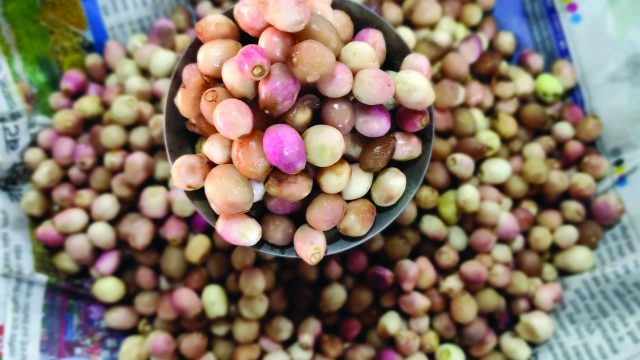
The heat is intense but it’s the time of the year that seasonal fruits are available in plenty Seasonal fruits are popular among locals in Goa, especially during the summer. With the popularity of social media, these summer fruits are searched on Google and tracked down in the markets. This has increased demand and has caused the prices to go up. Mangoes, the king of fruits, have always been the favourite. The ‘Mankurad’ is so superior that in the Panaji market, people spent about Rs 4,000 a dozen after the mangoes came to the markets in March. The rates have stabilised but ask the elders around and they’d say, “People would give them to us for a song (free). We never had to think twice before buying Mankurad mangoes but today it’s out of the common man’s reach.” Raw mangoes are coveted too. Used for pickles, preservatives and to go along with urrack with some salt and chilli, the markets are flooded with raw mangoes. ‘Panne’ is a cooler made from raw mangoes. Fresh tender cashews (bibbe) are used in various recipes. These cashews are plucked and peeled to get tender cashews. A favourite of Goans, there’s so much joy […]
An unforgettable culinary journey
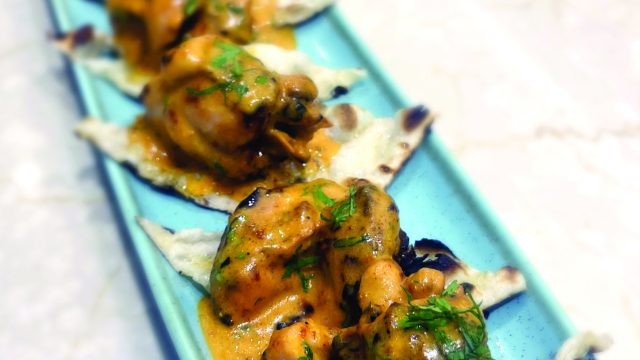
The new menu at Fortune Miramar will leave you spoilt for choice with fascinating options from cuisines around the world SHERYL GONSALVES | NT It was a day when the sun struggled to shine through the clouds. The rain beat down against my helmet and didn’t show any signs of letting up. However, even though there were partially waterlogged roads and traffic jams, there was one thing that kept me going – I was invited to try out the new menu at Fortune Miramar curated by executive chef William Dias. The new menu themed ‘Savour’ took two months to curate. Entering the Orchid restaurant in the hotel was a sight for sore eyes. The classy bright interiors were a welcoming visual contrast against the gloomy skies. My colleagues and I enjoyed the colourful mocktails brought to our table and then started digging into the Mezze Platter which had a variety of different dips like Muhammara, Hummus, Tzatziki, Olive Tapenade, Cauliflower Tartar, and Fatoush Salad. They were perfect flavour bombs with spicy and creamy notes. The crispy pita bread elevated the eating experience by providing texture. Mezze Platter We then had Malai Broccoli which was marinated in cashew cream, yoghurt, and […]
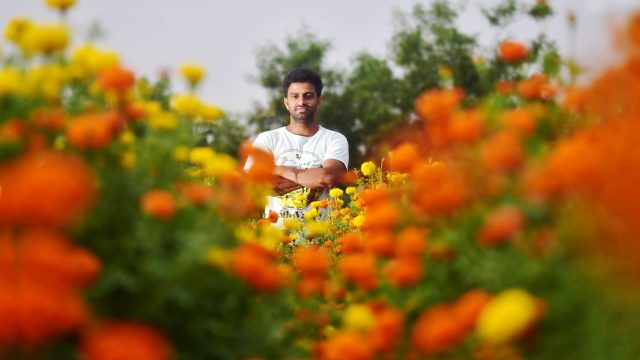
The marigold man of Goa
With a deep understanding of agriculture and a desire to bring locally grown marigold flowers to the Goan community, Amona-based farmer Krishna Sinari has embarked on the high-tech venture of marigold farming. RAMANDEEP KAUR | NT Inspired by the need for locally grown marigold flowers, Krishna Sinari, the owner of Prakriti Farm Products, has started a high-tech venture of marigold farming in a 3,000-square-meter plot. With a total of 5,000 plants, his farm boasts vibrant yellow and orange marigold flowers. The inspiration behind choosing marigold flowers as the primary crop stems, he says, is that even though Goa has a suitable environment for its growth, a majority of the flowers are brought in from other places. “Marigolds are essential for Diwali celebrations. So I chose to start my own marigold production to meet the local demand,” says Sinari, who holds a diploma in agriculture and has done various courses to enhance his knowledge in the field. Currently enjoying his first marigold harvest, the next crop of flowers will be during Diwali and later for Tulsi Vivah. After that, he will move on to the next crop. Sinari has previously cultivated hybrid chillies and lady fingers and plans to explore other […]
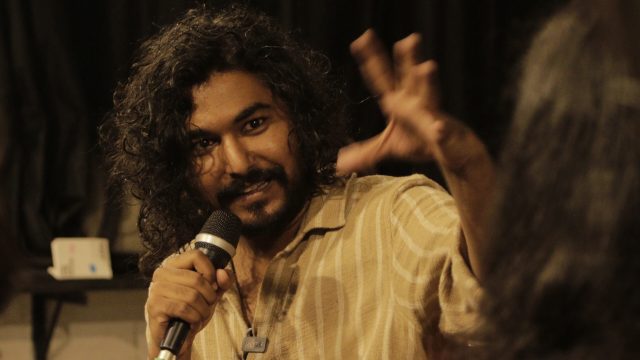
Goa-based musician ‘Discokid’ to perform at Serendipity Arts Festival 2023
Among the eight exceptional music artists handpicked for the B-side Music Production Residency programme, ‘Discokid’, a Goa-based musician will be performing at the Serendipity Arts Festival 2023. The 11-day workshop concluded in Olaulim recently and was organised by the Serendipity Arts Foundation. The eight artists namely Dzerouengmit Lepcha, Fatima Hakeen (Discokid), Lenix Lobo, Hasan Shahrukh, Govi, Ashel Unger, Rushaki Ghosh and Medhaj Dempo, delved deep into the intricacies of music production using Ableton Live, a digital audio workstation during the residency, which formally culminated on October 20. The residency was mentored by industry experts, including Jay Pei, Megha Balani, SHFT and Puneesh Suri. Fatima Hakeen aka ‘Discokid’ is a musician and producer based out of Goa and has been featured in well-known online music shows like Mixmag Goa and Worldwide FM. Over the eleven-day intensive program, the participants explored a myriad of techniques, from working with audio clips and MIDI basics to advanced production methods, honing their skills and collectively broadening their creative horizons. “Each participant brings a unique flavour to the table: from Dzerouengmit Lepcha’s soulful melodies to Discokid’s groovy beats, Lenix Lobo’s experimental sounds and Govi’s fusion of Carnatic vocals with indie and alternative genres. Hasan Shahrukh, with his expertise in […]
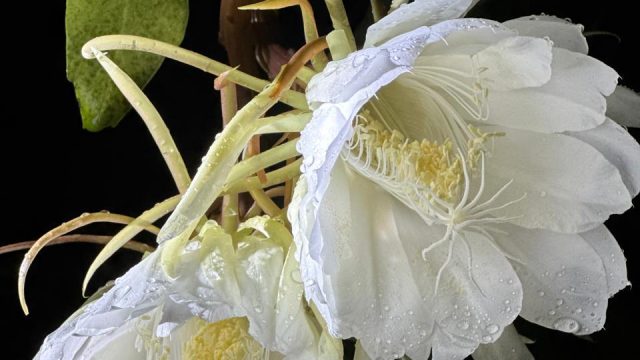
Glow of Epiphyllum – Brahma Kamal flowers of Goa
Recently, I came across a news story about a record-breaking bloom of 28 Brahma Kamal flowers in Goa. The spectacular sight of its prolific blossoms in the video took me on a trip down memory lane. We, too, had this beautiful plant in our garden, lovingly tended by my grandmother. Commonly referred to as ‘Bramhakamal’ in Goa and likely across the country, this plant is scientifically known as Epiphyllum Oxypetalum. Belonging to the Cactaceae family, it is an exotic plant native to the rainforests of Central and South America. Interestingly, it has no botanical connection to the true Bramhakamal species, scientifically named Saussurea obvallata, which is found and revered in Uttarakhand and the Himalayan regions. The slight resemblance between Epiphyllum Oxypetalum and the original Bramhakamal may explain the confusion between the two. Also known as the Dutchman’s Pipe Cactus or Queen of the Night, this flower truly lives up to its regal title. In our garden, this plant held a special place in my heart. Its slightly puffed, elongated leaves distinguished it from the other greenery. The celestial blooms appeared rarely, usually between July and September. One of the most unique aspects of this flower is how it unfurls its […]
Festa do Povo: Festival to Showcase Goan Heritage, Food, & Culture
The well-known community festival, Festa do Povo, returns to Panaji again, to promote Goan culture and heritage. The festival is coordinated through community involvement, with assistance from the Corporation of the City of Panaji (CCP) and Imagine Panaji, along the pedestrian walkway lined with mangroves at Patto Plaza near the Spaces building. Residents from various wards in the city, who reside in heritage homes and blocks, participate in the festival’s planning. What food can you expect here? It ranges from Goan-Portuguese to Hindu Saraswat to Muslim dishes, cooked by local home chefs, Panaji restaurants, and even international chefs. The food section of the festival showcases Goa’s rich culinary diversity across various religious communities. Additionally, a special Feni bar and beverage station featuring local drinks will enhance the festive atmosphere. Day one (December 14) will feature traditional Shigmo dances and children’s craft activities curated by Bookworm, a -book store for children. Participants can enjoy a variety of performances, including the Kaustubha Ballet, the beloved Stuti Choir, the traditional dekhni dance, and enchanting melodies by the Sound of Music. On the second day, December 15, there will be brass band performances, percussion displays, and carol singing by students from Nirmala School. This […]

A literary wonderland
The Goa Book Fair & Children’s Literature Festival is all set to bring together book lovers and storytellers RAMANDEEP KAUR | NT KURIOCITY Imagine a place where children can enjoy stories, meet their favourite authors, and explore books that spark their curiosity. That’s exactly what they’ll get at the Goa Book Fair & Children’s Literature Festival, scheduled from February 27 to March 3. A new addition to the annual Goa Book Fair, which has been running for two years, the Children’s Literature Festival is organised by The Dogears Bookshop, Margao, in collaboration with Publishing Next. According to co-founder of The Dogears Bookshop and the festival Leonard J Fernandes, it aims to create a dedicated space where children can engage with books, interact with authors, and develop a love for reading. He believes children remain drawn to good stories and engaging illustrations. “They’re selective about what they read and often influenced by their friends’ choices. They prefer books that engage them, which they can relate to and understand,” he says. Further, he stresses the importance of children’s literature in developing a love for reading. “Studies show that reading a wide range of books helps children think critically, research better, and spot […]

Timeless sacred music returns
A 60-member choir will perform Palestrina’s compositions along with Goan Lenten hymns SHERYL GONSALVES Polyphony, a complex style of music, was almost lost in the 16th century. Goa now has the chance to hear it, preserved through the work of Giovanni Pierluigi da Palestrina, the Italian Renaissance composer credited with safeguarding polyphony in the Church. “This style was almost abandoned as composers adapted it for secular music and church authorities felt sacred texts became hard to follow when sung in multiple voices,” says the Director of the Western Music Department at Kala Academy, Goa and Chancellor of the Archdiocese, Fr. Romeo Monteiro. He adds that Palestrina’s Missa Papae Marcelli was a turning point. “Its harmony impressed the cardinals, who recognised its importance and preserved it for posterity.” The upcoming ‘Concerts of Sacred Music’, a personal initiative by Fr. Monteiro for spiritual purposes, will showcase 60 singers and musicians. The programme includes Gregorian chant, early and later polyphony, popular hymns and Goan Lenten music. He says, “The Goan Lenten Motet is an important part of our heritage and deserves to be preserved.” The main attraction of the concert will be Palestrina’s Mass to mark the 500th anniversary of the composer’s birth. […]
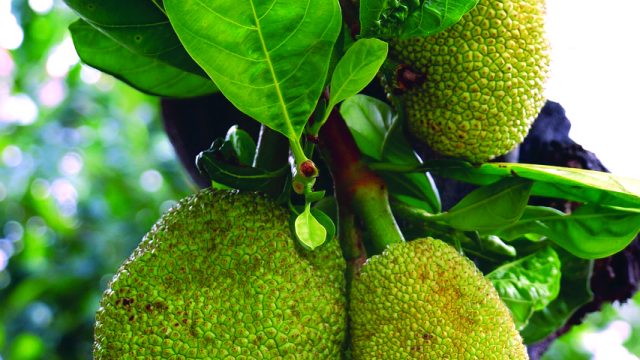
Under the jackfruit tree
When I close my eyes, I’m often transported to our old house with its traditional clay-tiled roof, where my entire childhood was spent happily with my grandparents and the lovingly tended trees that surrounded it. Our quiet afternoons were spent playing Bhatukali, the kitchen-kitchen game under its deep green and tranquil shade. Along with children, the tree also hosted parties for its guests: the birds. It was always a treat to our eyes to spot birds like the paradise flycatcher, grey hornbills, leafbirds, and orioles peeping through its thick, glossy leaves. Locally known as Fanas, the jackfruit tree is quite a useful tree in Goa and across many tropical regions. It is the state tree of Kerala and is held sacred in many cultures around the globe. In Goa, its roundish, thick and lustrous leaves are collected and stitched together with coconut sticks, to craft traditional plates (patravali). These patravalis are deftly crafted and stored throughout the year, ready to be used during village functions and other large community gatherings. Having a jackfruit tree around is like having a companion to the house. One can smell its sweet fragrance permeating the surroundings, although at times it can also be fetid. […]