


Resident of Goa or visiting this state, GoGoaNow is your one stop to the sights, sounds and taste of Goa. Here you can plan your weekend or your holiday with things to do, see, visit, eat and drink.
From exhibitions, concerts, dance, food and drink to performing arts, libraries and more, GoGoaNow is the definitive guide to events in Goa.
Featured Events
The Indo-Portuguese Friendship Society (IPFS), Goa, in collaboration with the Fundação Cidade de Lisboa, has announced its upcoming Portuguese language courses from July 1 to November 30 to be conducted in both Panaji and Margao branches. Limited seats. Details: 9552596875.
Fundacao Oriente in India, in association with the Department of Art & Culture, Government of Goa, will hold the fourth edition of the ‘Stars of the Future’ (SOF) Quiz Competition for high school and higher secondary students in Goa from October 28 to 31. Schools can register for the contest by emailing fosof2026@gmail.com. Each school can enter up to four teams, with a maximum of four students in each team.
Up Next
The Indo-Portuguese Friendship Society (IPFS), Goa, in collaboration with the Fundação Cidade de Lisboa, has announced its upcoming Portuguese language courses from July 1 to November 30 to be conducted in both Panaji and Margao branches. Limited seats. Details: 9552596875.
Fundacao Oriente in India, in association with the Department of Art & Culture, Government of Goa, will hold the fourth edition of the ‘Stars of the Future’ (SOF) Quiz Competition for high school and higher secondary students in Goa from October 28 to 31. Schools can register for the contest by emailing fosof2026@gmail.com. Each school can enter up to four teams, with a maximum of four students in each team.
Essentially Goa
A simpler life is better ~ Literati Bookshop Founder
“We’re lucky to have a roof over our heads and our basic needs met,” says Divya Kapur, the founder of the Literati Bookshop in Calangute, while talking to NT GoGoaNow. Sheryl Gonsalves | NT GoGoaNow This ex-lawyer started focusing on what she could do at home during the lockdown. She checked in on her friends and family to see if they were okay. Divya jokingly shared that she’s not that productive but she spent her time reading, watching television, and engaged in some physical activities. Speaking about the Literati Bookshop she reveals that they’re encouraging people to opt for home delivery. Now they hold virtual book club meets but movie screenings and book launches can’t happen. Divya is of the opinion that a simpler life is better. She says, “I’m looking forward to going to the beach, swimming in the sea, and watching the sunset.” [siteorigin_widget class=”SiteOrigin_Widget_Image_Widget”][/siteorigin_widget] [siteorigin_widget class=”SiteOrigin_Widget_Image_Widget”][/siteorigin_widget]
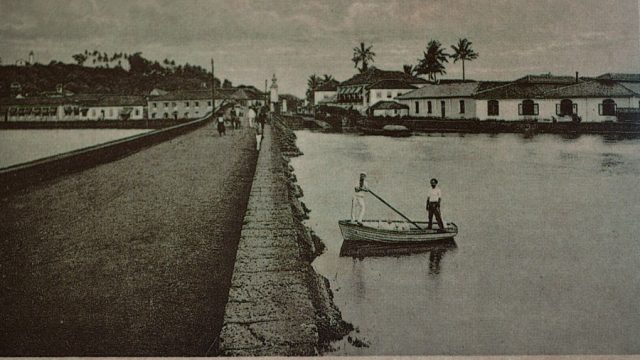
A sneak-peek into life in Goa decades ago
Have you ever wondered how Goa was in the past? A simple 82-year-old Goan lady shares details about her life with us. Sheryl Gonsalves | NT GoGoaNow What was Goa like during your youth? There was unity in the family. My mother used to go out of the way by making less for the family and giving the neighbour. My food diet was usually rice and curry. Chicken and other meat was a luxury which was eaten for festivals. Beef was rarely consumed but pork was the most common thing. There were no fridges so we made dishes that could last for some time. I also usually had pulses, beans, pumpkin, gourd, and long string beans. A lot of superstitions were believed in those days. We were told to not go out at night because evil spirits are roaming. On ‘All souls day’ people believed that the souls will come and drink water. They would keep food on top of the roof for the souls. Another superstition was that after midnight a headless evil man/ spirit will roam with a stick. So if people heard any sound like a stick beating something, they would put the lights off and hide […]

A tribute to the cashew
Dedicated to the people of Goa, Goan musician O’luv has come out with his new music video ‘The CASHEW song of Goa’ Goan musician O’luv has released his new music video single ‘The CASHEW song of Goa’ on his YouTube channel O’luv Goa. The video has been created over a span of three months, with site visits to understand the process and to draw inspiration for the lyrics and to create the visuals. From the picking of the tree-ripened cashew apples with the ‘tochni’ or ‘kantto’ [ a stick with a spur or thorn near the tip], to the separation of the nut from the cashew apple for the extraction of the juice at the ‘kollbi’, to the fermentation and the two distillations at the ‘battie’ using the traditional clay-pot ‘lavnni’ as the condenser, most of the processes involved are covered in a song. The aim of the song is to celebrate the cashew (anacardium occidentale) that came from Brazil and became one of our own in Goa. We have found a number of uses for the tree, its nut and the cashew apple and it is now an integral part of the Goan culture and traditions. It is used […]
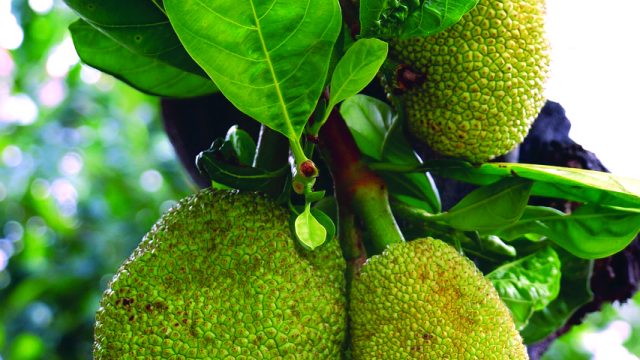
Under the jackfruit tree
When I close my eyes, I’m often transported to our old house with its traditional clay-tiled roof, where my entire childhood was spent happily with my grandparents and the lovingly tended trees that surrounded it. Our quiet afternoons were spent playing Bhatukali, the kitchen-kitchen game under its deep green and tranquil shade. Along with children, the tree also hosted parties for its guests: the birds. It was always a treat to our eyes to spot birds like the paradise flycatcher, grey hornbills, leafbirds, and orioles peeping through its thick, glossy leaves. Locally known as Fanas, the jackfruit tree is quite a useful tree in Goa and across many tropical regions. It is the state tree of Kerala and is held sacred in many cultures around the globe. In Goa, its roundish, thick and lustrous leaves are collected and stitched together with coconut sticks, to craft traditional plates (patravali). These patravalis are deftly crafted and stored throughout the year, ready to be used during village functions and other large community gatherings. Having a jackfruit tree around is like having a companion to the house. One can smell its sweet fragrance permeating the surroundings, although at times it can also be fetid. […]
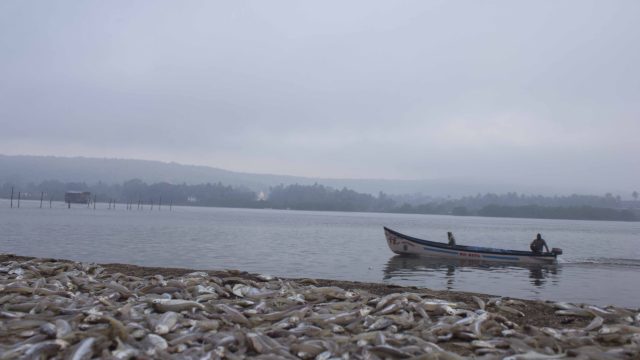
The Goan Fish Tales
Fish is considered as the staple diet of the Goan people. All humans use readily available edible resources and slowly develop a culture around it and the knowledge is passed from generation to generation. Fish became an integral part of Goan diet from prehistoric times (50000-60000 years before present). Goa has an unenviable culture showcasing different ways communities look at, understand, worship, love/hate, catch, cook and serve fish. Goa being rich in freshwater and marine ecosystems offers free, highly diverse (about 250 species of fish and shellfish) fisheries resources so the culture of catching fish developed much before animal husbandry or agriculture. Due to early semi-nomadic settlers who camped first in Mandovi and Zuari river basins about 50-60000 years ago and developed the practice of catching fish using different gears. [siteorigin_widget class=”SiteOrigin_Widget_Image_Widget”][/siteorigin_widget] Fish was a staple diet in ancient Goa even before the caste system was developed so almost all ethnic Goan communities are found to utilize fish in their food but there are clear taboos about meat. After the advent of GSB (Goa Saraswat Brahmins) migrants the legend of Sage Saraswat saving the Vedas by consuming fish from Vedic river Saraswati became popular and the Brahmins too justified consumption […]
A talk with a lady who creates Beauty out of Waste
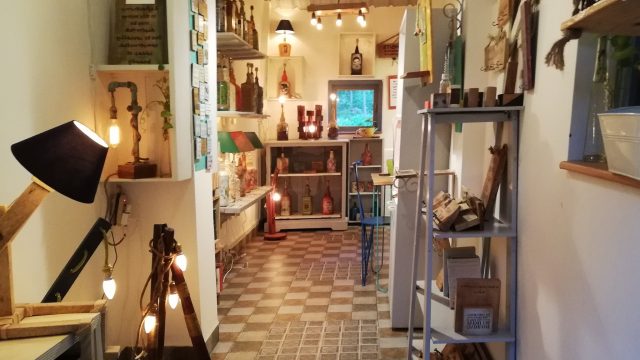
“I’m looking forward to a new normal. I haven’t thought that far ahead. Let’s take one step at a time and this too shall pass,” says Sharmila regarding the lockdown and the Covid-19 situation. Sheryl Gonsalves – NT GoGoaNow Sharmila, the owner of ‘Kitsch Bits’ creates beautiful items out of waste material. The pandemic affected her sales, which she expected, as nowadays people are more careful with their money because of the economic situation. During the lockdown, her time was spent doing housework, practicing woodburning, different painting techniques, experimenting with new waste products, and creating new looks for her works. The lockdown wasn’t boring for her. She even tried to knead her own bread when bread wasn’t available. However, Sharmila did get frustrated sometimes as she didn’t always have the material she needed to create her craftworks. All the housework led to tiredness, but what made her feel good was performing kind acts like feeding stray animals. She had plans to go to France this October but unfortunately had to cancel her trip. Sharmila suggests buying groceries once a week and carpooling instead of coming and going to the market so often and causing more pollution. She says: “We need […]
A literary wonderland
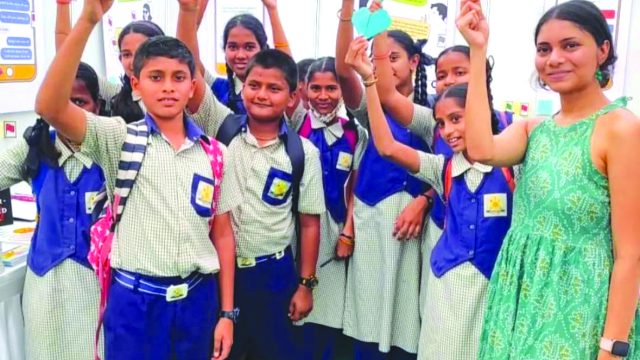
The Goa Book Fair & Children’s Literature Festival is all set to bring together book lovers and storytellers RAMANDEEP KAUR | NT KURIOCITY Imagine a place where children can enjoy stories, meet their favourite authors, and explore books that spark their curiosity. That’s exactly what they’ll get at the Goa Book Fair & Children’s Literature Festival, scheduled from February 27 to March 3. A new addition to the annual Goa Book Fair, which has been running for two years, the Children’s Literature Festival is organised by The Dogears Bookshop, Margao, in collaboration with Publishing Next. According to co-founder of The Dogears Bookshop and the festival Leonard J Fernandes, it aims to create a dedicated space where children can engage with books, interact with authors, and develop a love for reading. He believes children remain drawn to good stories and engaging illustrations. “They’re selective about what they read and often influenced by their friends’ choices. They prefer books that engage them, which they can relate to and understand,” he says. Further, he stresses the importance of children’s literature in developing a love for reading. “Studies show that reading a wide range of books helps children think critically, research better, and spot […]
Glow of Epiphyllum – Brahma Kamal flowers of Goa
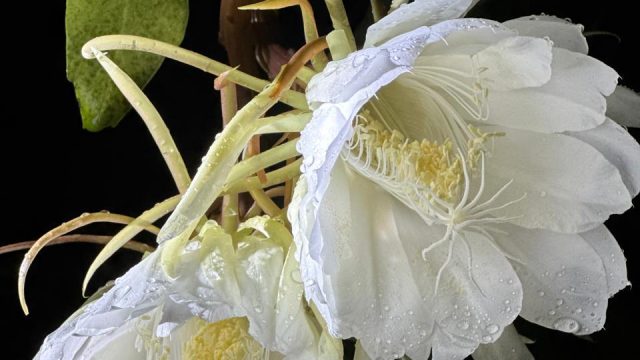
Recently, I came across a news story about a record-breaking bloom of 28 Brahma Kamal flowers in Goa. The spectacular sight of its prolific blossoms in the video took me on a trip down memory lane. We, too, had this beautiful plant in our garden, lovingly tended by my grandmother. Commonly referred to as ‘Bramhakamal’ in Goa and likely across the country, this plant is scientifically known as Epiphyllum Oxypetalum. Belonging to the Cactaceae family, it is an exotic plant native to the rainforests of Central and South America. Interestingly, it has no botanical connection to the true Bramhakamal species, scientifically named Saussurea obvallata, which is found and revered in Uttarakhand and the Himalayan regions. The slight resemblance between Epiphyllum Oxypetalum and the original Bramhakamal may explain the confusion between the two. Also known as the Dutchman’s Pipe Cactus or Queen of the Night, this flower truly lives up to its regal title. In our garden, this plant held a special place in my heart. Its slightly puffed, elongated leaves distinguished it from the other greenery. The celestial blooms appeared rarely, usually between July and September. One of the most unique aspects of this flower is how it unfurls its […]
Traditional sweets of Goa
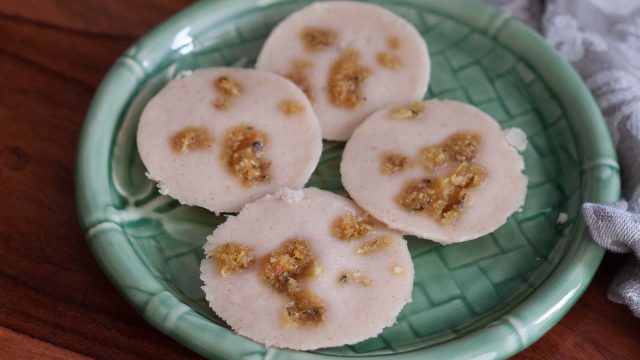
We have all heard about the famous Goan fish thalis, prawn curries, sorpotel, chicken cafreal, and vindaloo. Now it’s time to celebrate the sweets of Goa. The people of Goa still make traditional sweets from recipes passed down from generation to generation. Here are some of the famous traditional sweets of Goa: Bebinca This is a type of layered pudding. The ingredients which usually go into it are all-purpose flour, eggs, sugar, coconut milk, nutmeg, and ghee. It takes time to prepare this lovely dessert as each layer has to be baked first before adding the next one. Bebinca usually has 7 to 16 layers. In many places, it is served with vanilla ice-cream. You can eat all the layers at once or peel one layer at a time and savour each one. [siteorigin_widget class=”SiteOrigin_Widget_Image_Widget”][/siteorigin_widget] Dodol Dodol is made using coarsely ground raw paddy rice flour, black jaggery, coconut milk, and cashew nuts. The coconut is ground and the juice/ milk is extracted. It is traditionally cooked on firewood. The end result is a pudding-like sweet which almost melts in your mouth. It is mostly made for Christmas. Sugar isn’t used and so dodol gets its taste from the delicious Goa […]
Backpacking Guide: Baga
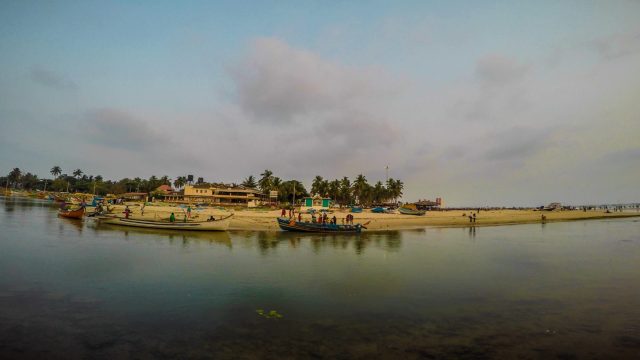
Want to experience the nightlife as well as the serene beaches during a tight vacation? Baga is the place to be! Baga is indeed one of the most serene yet commercialized places in Goa. Baga, a small village, along the coast of Goa is nothing but beautiful for the traveler who is on a time limit. Baga creek Baga creek is the perfect place for you to sit and watch the sunset. Right next to Baga beach lays the creek and it has one of the most beautiful views. The picture perfect place makes it a get-away to few locals who come fishing daily and also a view of the ever buzzing Baga beach. The creek is surrounded by beautiful rocks with the waves clashing against it. Saturday night market Another place to visit whilst in Baga is the Saturday Nite Market. As the name specifies, the market is open during the nights. The vast number of stalls sell clothes, jewelry and other kinds of artistic pieces. They also have food stalls that’ll help curb that mid-night hunger! They also have an open stage which gives upcoming talent showcase their work. Baga tibetian market Baga Tibetian Market is another flea […]
t